Lifeguard On Site Training – Building Safer Communities
Shallow water lifeguard training is designed for individuals who want to help protect swimmers in pools and aquatic facilities where the water depth is limited. While shallow water may appear less dangerous than deep water, aquatic emergencies can still happen quickly. Children, inexperienced swimmers, weak swimmers, tired swimmers, and distracted guests may still need immediate help, even in water that appears easy to stand in.
The American Lifeguard Association offers shallow water lifeguards respond to emergencies in water up to 5 feet deep. The course is intended for aquatic facilities with a maximum water depth of 5 feet or less.
(American Lifeguard Association)
This type of training is especially useful for shallow pools, activity pools, instructional pools, splash areas, resort pools, hotel pools, community pools, school pools, recreation centers, apartment pools, and other controlled aquatic settings where deep-water lifeguarding may not be the correct match for the facility.
Shallow water lifeguarding is still lifeguarding. A shallow water lifeguard must be alert, trained, responsible, and ready to respond. The job still requires surveillance, prevention, rescue readiness, CPR/AED, First Aid, emergency action plan awareness, and employer-based practical evaluation in the actual aquatic environment.
Shallow water lifeguard training is a specialized lifeguard training pathway for aquatic environments where the maximum water depth is limited. Instead of preparing candidates for deep-water rescues, shallow water lifeguard training focuses on prevention, surveillance, recognition of distress, shallow-water rescues, emergency care, and practical readiness for facilities with limited water depth.
The American Lifeguard Association’s shallow water program includes lifeguarding, CPR/AED, and First Aid, and the American Lifeguard Association’s shallow water program includes lifeguarding, CPR/AED, and First Aid, and is designed to teach candidates the skills needed to prevent and respond to aquatic emergencies in shallow water environments.(American Lifeguard Association)
A shallow water lifeguard may work in settings such as:
Shallow swimming pools.
Instructional pools.
Hotel and resort pools.
Community recreation pools.
School aquatic facilities.
Camp pools.
Apartment and condominium pools.
Aquatic play areas.
Waterpark activity areas with limited depth.
Family aquatic centers.
The goal of shallow water lifeguard training is not simply to complete a course. The goal is to prepare the candidate to help prevent emergencies, recognize swimmers in distress, respond quickly, and support a safer aquatic environment.
Global drowning deaths each year (WHО)
Cause of injury death, ages 1-4 in the U.S.
Years of ALA lifeguard training
Shallow water can create a false sense of security. Many people assume that if a swimmer can stand up, the risk is low. In reality, emergencies can still happen in shallow water. A child can slip, panic, become submerged, inhale water, suffer a medical emergency, or be injured during play. An inexperienced swimmer may become frightened. A guest may fall on the deck. A person may need CPR or First Aid before emergency medical services arrive.
The CDC continues to identify drowning as a serious public health concern, reporting that more than 4,000 unintentional drowning deaths occur each year in the United States and that drowning is a leading cause of death for children. (CDC)
That is why shallow water facilities need trained lifeguards who understand prevention and early response. The best lifeguard is not only someone who can perform a rescue. The best lifeguard is someone who helps prevent the emergency from happening in the first place.
Shallow water lifeguard training helps prepare candidates to:
A shallow water lifeguard may not be assigned to deep-water rescue duties, but the responsibility remains serious. When a guest is in trouble, seconds matter.
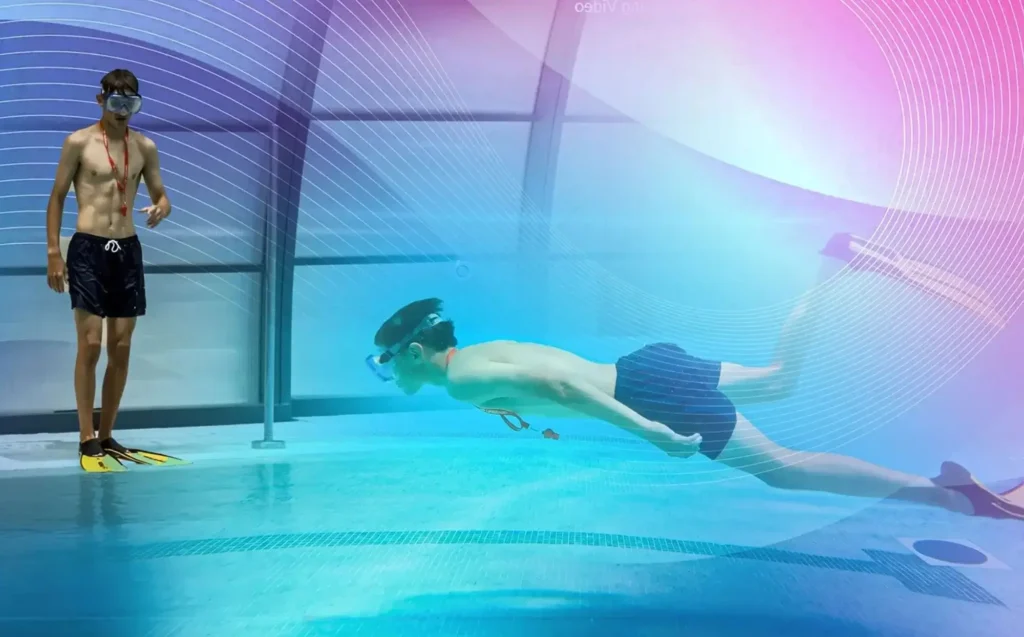
The main difference between shallow water lifeguard training and deep water lifeguard training is the environment for which the candidate is being prepared.
is intended for facilities where the water depth does not exceed the shallow-water certification limit. Shallow water lifeguard training is valid for swimming pools with a maximum water depth of no more than 5 feet.(American Lifeguard Association)
is intended for lifeguards who may work in deeper pools or aquatic environments where a victim may be below the surface at greater depths.
The CDC Model Aquatic Health Code specifically recognizes that some training agencies distinguish between shallow-water and deep-water lifeguards. It states that when a training agency offers a shallow-water certification, candidates must receive training and evaluation in the deepest depth allowed for that certification. (CDC)
This is an important point for students and employers. A shallow water lifeguard certification should match the actual facility environment. Employers should confirm that the facility’s maximum water depth, job duties, local rules, and insurance requirements are consistent with the certification being used.
Shallow water lifeguard training is a strong option for candidates who plan to work at aquatic facilities with limited water depth. It may be especially helpful for students, seasonal employees, hotel pool staff, recreation center employees, camp staff, and aquatic facilities that do not require deep-water lifeguard coverage.
This training may be appropriate for:
Students should confirm the correct certification type before registering. If the facility has water deeper than the shallow-water limit, a different lifeguard certification may be required.
Shallow water lifeguard training should prepare candidates for the real duties they may face on the pool deck and in the water. The program should include prevention, rescue readiness, CPR/AED, First Aid, emergency response, and professional responsibility.
Prevention is the foundation of lifeguarding. A shallow water lifeguard must watch the water actively, recognize unsafe behavior, enforce rules, and identify risks before an emergency happens.
Shallow water environments often include children, families, beginner swimmers, swim lessons, play structures, and high-activity areas. These settings can be busy, noisy, and distracting. A trained lifeguard must remain focused.
Shallow water lifeguards learn to watch for:
Weak swimmers.
Children separating from adults.
Guests who slip or fall.
Unsafe play.
Overcrowding.
Submersion.
Unusual stillness or panic.
Medical distress.
Hazards on the deck or in the water.
Good surveillance is not passive. It requires constant attention, proper positioning, communication, and readiness.
A shallow water lifeguard must be able to recognize when someone is in trouble. Drowning does not always look dramatic. A person in distress may not wave, shout, or call for help. A child may become quiet, slip below the surface, or struggle without making obvious noise.
Shallow water lifeguard training helps candidates understand the signs of distress and drowning, including lack of forward progress, vertical body position, panicked movement, silent struggle, face-down floating, or sudden submersion.
Early recognition is one of the most important lifeguarding skills. The faster a lifeguard identifies a problem, the faster the response can begin.
Shallow-water rescue skills are tailored to limited-depth aquatic environments. Lifeguards must know how to enter the water safely, approach a victim, use rescue equipment, protect themselves, support the victim, remove the victim from the water, and begin care when needed.
Rescue skills may include:
Reaching assists.
Throwing assists.
Use of a rescue tube.
Front and rear victim approaches.
Active victim rescues.
Passive victim rescues.
Submerged victim response within the certification depth.
Safe removals from the water.
Team rescues.
Post-rescue care.
A shallow water rescue may seem simple, but it still requires training. A frightened swimmer may grab the rescuer. A victim may be unresponsive. A child may need immediate breathing support. A guest may have a spinal or head injury. Lifeguards must be prepared to respond safely and correctly.
Shallow water lifeguards must be prepared for emergencies that continue after the rescue. A guest may need CPR. A victim may need rescue breathing. A swimmer may suffer a medical emergency. A child may fall and need First Aid. A person may need AED support before EMS arrives.
The CDC Model Aquatic Health Code identifies CPR, AED use, First Aid, emergency response, hazard identification, injury prevention, and legal issues as important lifeguard training content. (CDC)
The American Lifeguard Association’s shallow water program includes CPR/AED and First Aid with the shallow water lifeguard certification pathway. (American Lifeguard Association)
This combination is important because lifeguards are often the first trained responders at aquatic facilities.
A shallow water lifeguard must know how to respond as part of a facility safety team. Emergency action plans help staff respond quickly and consistently when an incident occurs.
A lifeguard may need to activate the emergency action plan, alert other staff, clear the water, begin care, contact EMS, communicate with supervisors, locate equipment, assist with documentation, and help restore the facility to safe operation.
The CDC Model Aquatic Health Code states that aquatic facilities should have a safety plan that includes a staffing plan, emergency action plan, biohazard action plan, pre-service training plan, and in-service training plan. (CDC)
This means lifeguard training and facility operations should work together.
The American Lifeguard Association’s shallow water page states that candidates must be at least 15 years old and that the shallow water program is designed for aquatic facilities with a maximum water depth of 5 feet or less. (American Lifeguard Association)
The shallow water lifeguard course takes approximately 27.5 hours to complete, combining video instructor-led academic instruction with skills preparation. Candidates must achieve a minimum score of 80% on the written exam to pass. Candidates who do not pass on the first attempt may retake the exam; details on the retake process are provided during enrollment. Upon successful completion, the shallow water lifeguard certification is valid for two years from the date of issue.
To enroll, candidates must be able to swim 100 yards continuously using front crawl or breaststroke, tread water for two minutes using legs only (no hands), and complete a timed event: swim 20 yards, surface dive to retrieve a 10-pound object from the pool bottom, return to the surface, and swim back to the starting point — all within 1 minute 40 seconds.(American Lifeguard Association)
Candidates should review all current course requirements before enrolling and should confirm that the program matches the aquatic facility where they intend to work.
Employers may also require additional steps, such as:
Facility orientation.
Proof of certification.
Facility-specific skills evaluation.
Background screening.
Emergency action plan training.
Surveillance zone training.
CPR/AED and First Aid review.
In-service drills.
Local health department or authority requirements.
The course provides the training foundation. The employer confirms readiness for the actual facility.
The role of lifeguards, aquatic managers, and individuals in ensuring safety cannot be underestimated. By undergoing proper training, maintaining awareness of water hazards, and committing to safety protocols, we can make water activities safer for all participants. Aquatics and water safety are everyone’s responsibility. With the right knowledge and tools, we can all help reduce drowning incidents and injuries while enjoying the water.
The American Lifeguard Association offers shallow water lifeguard training through a video instructor-led blended learning format. This allows candidates to complete structured academic instruction while preparing for practical responsibilities in the aquatic environment.
It is important to describe ALA’s model correctly. The program should not be described as simply “online-only.” It is video instructor-led blended learning. Practical competency is addressed within the aquatics environment through employer-based pre-service evaluations and ongoing in-service procedures established to meet CDC Model Aquatic Health Code requirements. These are CDC MAHC requirements and national standards set by the CDC, not requirements created by ALA.
The CDC Model Aquatic Health Code defines a qualified lifeguard as someone who has completed an AHJ-recognized lifeguard training course, holds a current certificate, has met pre-service requirements, and is participating in continuing in-service training at the aquatic facility. (CDC)
That definition supports a responsible blended training pathway:
The candidate completes structured academic training.
The candidate completes required testing and certification steps.
The employer verifies the certification.
The employer evaluates practical competency in the actual shallow-water environment.
The facility maintains readiness through ongoing in-service training.
This approach supports both flexibility and safety.
Practical competency is especially important for shallow water facilities because each facility has different risks. A hotel pool may have a different layout than a school pool. A splash pool may have different patron behavior than a recreation center pool. A shallow water attraction may have different rescue routes, equipment, and staffing patterns than a small community pool.
The CDC Model Aquatic Health Code states that pre-service requirements should include facility-specific policy and procedure training, demonstration of safety team skills before assuming on-duty lifeguard responsibilities, and documentation of training. (CDC)
For shallow water facilities, employer-based evaluation may include:
Confirming the pool’s maximum water depth.
Reviewing surveillance zones.
Practicing rescue approaches in the assigned water depth.
Identifying high-risk areas.
Locating rescue tubes, AEDs, First Aid kits, and emergency equipment.
Practicing victim recognition.
Reviewing rules for children and weak swimmers.
Practicing emergency action plan response.
Demonstrating CPR/AED and First Aid readiness.
Documenting pre-service training.
Conducting ongoing in-service drills.
This process helps confirm that the lifeguard is prepared for the specific aquatic facility, not just the general concept of lifeguarding.
Shallow water lifeguard certification can help candidates qualify for lifeguard positions at facilities where the certification matches the water depth and job duties. Employers should confirm that the certification is appropriate for the facility and consistent with local authority, health department, insurance, and operational requirements.
The U.S. Department of Labor’s Field Operations Handbook states that the Wage and Hour Division has determined that the American Lifeguard Association offers lifeguard certification programs similar to those offered by the American Red Cross and that they satisfy the requirements of 29 CFR § 570.34(l). The same section notes that the list is not exhaustive. (DOL)
Students should still confirm acceptance with their employer or local authority before beginning work. Hiring decisions may vary by facility, jurisdiction, insurance carrier, school, camp, municipality, or employer policy.
Certification is important, but employer review is also important. The best practice is to complete the correct certification, verify acceptance, complete facility-specific pre-service evaluation, and participate in ongoing in-service training.
Shallow water lifeguard training may be especially relevant for younger candidates seeking seasonal lifeguard work at pools and waterparks. The U.S. Department of Labor explains that 15-year-olds, but not youth under 15, may be employed as lifeguards at traditional swimming pools and most water amusement park facilities when the required conditions are met, including being trained and certified by the American Red Cross or a similar certifying organization in aquatics and water safety. (DOL)
The same DOL guidance states that youth under 16 may not be employed as lifeguards at natural environment facilities such as rivers, streams, lakes, ponds, reservoirs, wharfs, piers, or ocean-side beaches. (DOL)
This distinction matters. A shallow water lifeguard candidate should understand where they may work, what duties they may perform, and what additional employer or legal requirements may apply.
Employers operating shallow water aquatic facilities need lifeguards who are trained for the actual environment. A shallow water facility may attract families, children, inexperienced swimmers, and guests who assume the risk is low because the water is not deep.
Employers should use shallow water lifeguard training as part of a larger safety system that includes:
Certification verification.
Pre-service evaluation.
Facility orientation.
Emergency action plan training.
Documented in-service drills.
Surveillance zone assignments.
Rescue equipment readiness.
AED and First Aid availability.
Supervisor review.
Ongoing skill maintenance.
The CDC Model Aquatic Health Code addresses safety plans, staffing plans, emergency action plans, pre-service training, and in-service training as part of aquatic facility management. (CDC)
A strong employer program does not stop at certification. It uses certification as the foundation and then builds facility-specific readiness.
The American Lifeguard Association’s shallow water lifeguard training is designed to provide a practical certification pathway for candidates and employers who need training matched to limited-depth aquatic facilities.
Benefits include:
A shallow water lifeguard training pathway for facilities with a maximum water depth of 5 feet or less.
Video instructor-led blended learning.
Lifeguarding, CPR/AED, and First Aid training.
A flexible option for students and employers.
Support for employer-based practical competency evaluation.
Credential verification through ALA’s verification system.
A course length of approximately 27.5 hours, an 80% passing score requirement, and a two-year certification validity period.
A certification pathway that may support employment in pools, recreation centers, schools, camps, hotels, resorts, and other shallow-water settings.
ALA’s homepage states that the association has been offering lifeguard courses for over 35 years and that its training program is designed to teach candidates the knowledge and skills needed to help prevent and respond to aquatic emergencies. (American Lifeguard Association)
For candidates who plan to work in shallow-water facilities, this training can provide a practical path toward certification and job readiness.
After completing shallow water lifeguard training, candidates should take the next steps needed to prepare for employment.
Those steps may include:
Confirming certification records.
Providing proof of certification to the employer.
Confirming the facility’s maximum water depth.
Completing employer-based pre-service evaluation.
Reviewing the facility’s emergency action plan.
Practicing rescues in the assigned environment.
Participating in CPR/AED and First Aid review.
Attending in-service training.
Maintaining readiness throughout the season.
ALA’s shallow water page states that successful candidates receive a shallow water lifeguard certification that includes CPR/AED and First Aid and that certification records are stored in the National Verification System for employer and health official review. (American Lifeguard Association)
Students should also track expiration dates and plan renewal before their certification expires.
Many students search for “shallow water lifeguard training near me” because they need a certification for a local pool, recreation center, hotel, resort, camp, school, or waterpark position.
ALA’s video instructor-led blended learning format helps candidates begin the training process without waiting for a traditional group class in every location. That flexibility can be especially helpful during the summer hiring season when pools and aquatic facilities need trained staff quickly.
When searching for shallow water lifeguard training near you, ask:
Does the facility have a maximum water depth of 5 feet or less?
Does your employer accept shallow water lifeguard certification?
Does the training include CPR/AED and First Aid?
Does the program address prevention and rescue response?
Will the employer conduct practical skills evaluation?
Will the employer provide ongoing in-service training?
Can the certification be verified?
Does the program match the job you want?
The right course should match the facility and the lifeguard role.
Shallow water lifeguard training is a specialized lifeguard training pathway for candidates who plan to work at aquatic facilities with limited water depth. ALA’s shallow water program is designed for facilities with a maximum water depth of 5 feet or less. (American Lifeguard Association)
Shallow water lifeguard training generally includes prevention, surveillance, victim recognition, shallow-water rescue skills, CPR/AED, First Aid, emergency response, and professional lifeguard responsibilities.
It is mainly intended for controlled shallow-water aquatic environments, such as pools, instructional pools, resort pools, recreation pools, and shallow-water attractions. Employers should confirm that the certification matches the facility depth, job duties, and local requirements.
ALA’s shallow water page states that the program is intended for aquatic facilities with a maximum water depth of 5 feet or less. (American Lifeguard Association)
No. Shallow water lifeguard training is designed for limited-depth aquatic environments. Deep water lifeguard training is intended for deeper aquatic environments. The CDC Model Aquatic Health Code states that when agencies distinguish between shallow-water and deep-water certifications, shallow-water candidates should be trained and evaluated in the deepest depth allowed for that certification. (CDC)
Yes. ALA’s shallow water training page states that the program includes shallow water lifeguard certification along with CPR/AED and First Aid. (American Lifeguard Association)
No. ALA’s program should be described as video instructor-led blended learning. Practical competency is addressed within the aquatics environment through employer-based pre-service evaluations and ongoing in-service procedures established to meet CDC Model Aquatic Health Code requirements.
Every aquatic facility is different. The CDC Model Aquatic Health Code states that pre-service requirements include facility-specific policies and procedures, demonstration of safety team skills before assuming lifeguard duties, and documentation of training. (CDC)
ALA’s shallow water page states that candidates must be at least 15 years old. Federal youth-employment guidance also addresses properly certified 15-year-old lifeguards at traditional swimming pools and most water amusement park facilities. (American Lifeguard Association)
The U.S. Department of Labor’s Field Operations Handbook states that American Lifeguard Association certification programs are similar to those offered by the American Red Cross and satisfy the requirements of 29 CFR § 570.34(l). Students should still confirm employer, local authority, and facility-specific requirements. (DOL)
Join thousands trained by the American Lifeguard Association. Nationally recognized certification, backed by 30+ years of experience.