Lifeguard On Site Training – Building Safer Communities
Lifeguard classes are the first step toward becoming a trained aquatic safety professional who is prepared to help prevent emergencies, recognize danger, respond quickly, and assist swimmers in distress. Whether you want to work at a swimming pool, waterpark, camp, school, resort, beach, fitness center, or community aquatic facility, professional lifeguard training provides the foundation needed to protect lives around the water.
Drowning remains one of the most serious public safety concerns in the United States. The CDC reports that drowning is a leading cause of death for children, with more children ages 1–4 dying from drowning than any other cause, and drowning ranking second for unintentional injury death among children ages 5–14 after motor vehicle crashes. That is why properly structured lifeguard classes, water safety education, CPR/AED training, First Aid, and facility-based emergency preparation are so important. (CDC)
The American Lifeguard Association offers lifeguard classes designed to help students gain the knowledge, confidence, and preparation needed to serve in aquatic environments. Our lifeguard classes are built around a video instructor-led blended learning format, allowing participants to complete structured academic instruction while preparing for the practical responsibilities of lifeguarding.
Lifeguarding is more than sitting in a chair and watching the water. A lifeguard must be alert, disciplined, physically capable, calm under pressure, and ready to act when seconds matter. A strong lifeguard class teaches prevention first, rescue second, and emergency care throughout.
Every aquatic facility depends on trained lifeguards to reduce risk and respond to emergencies. A well-prepared lifeguard helps prevent accidents before they happen by enforcing rules, scanning the water, identifying unsafe behavior, recognizing signs of distress, and responding according to the facility’s emergency action plan.
The U.S. Department of Labor describes lifeguard duties as including rescuing swimmers in danger of drowning, monitoring swimming pool activities to prevent accidents, teaching water safety, assisting patrons, maintaining order, and administering first aid. These duties show why lifeguard classes must prepare students for both prevention and emergency response. (DOL)
A professional lifeguard class helps students understand that the most successful rescue is often the one that never has to happen. Prevention, surveillance, communication, teamwork, and quick decision-making are core parts of the job.
In a quality lifeguard class, students learn how to:
Recognize swimmers in distress before the situation becomes fatal.
Use a rescue tube and other safety equipment properly.
Respond to active and passive drowning victims.
Provide CPR, AED, and First Aid when needed.
Communicate with other lifeguards and emergency responders.
Follow emergency action plans and facility procedures.
Understand professional responsibilities and legal duties.
Maintain readiness through continued practice and in-service training.
The goal is not only to earn a certificate. The goal is to become prepared to help protect the public in real aquatic environments.
Lifeguard classes are structured training programs that teach the knowledge and skills needed to help prevent, recognize, and respond to aquatic emergencies. These classes usually include lifeguarding principles, water rescue techniques, CPR/AED, First Aid, emergency response, injury prevention, and professional conduct.
The American Lifeguard Association’s lifeguard classes are designed for individuals who want to become lifeguards for the first time, renew their training, or prepare for employment at aquatic facilities. ALA states that its classes include lifeguarding, CPR/AED, First Aid, and injury-prevention training, and its homepage describes individual and group training options that can be completed with nationwide support. (American Lifeguard Association)
A lifeguard class should help students understand both the technical and human sides of lifeguarding. Technical skills include swimming, rescue entries, victim approaches, assists, removals, CPR, AED use, and First Aid. Human skills include judgment, confidence, communication, leadership, professionalism, and the ability to remain calm during emergencies.
A lifeguard may be the first person to recognize a problem, the first person to enter the water, the first person to begin CPR, and the first person to coordinate help until emergency medical services arrive. That is why a lifeguard class must be serious, organized, and focused on real-world readiness.
Global drowning deaths each year (WHО)
Cause of injury death, ages 1-4 in the U.S.
Years of ALA lifeguard training
This structure supports both flexibility and accountability.
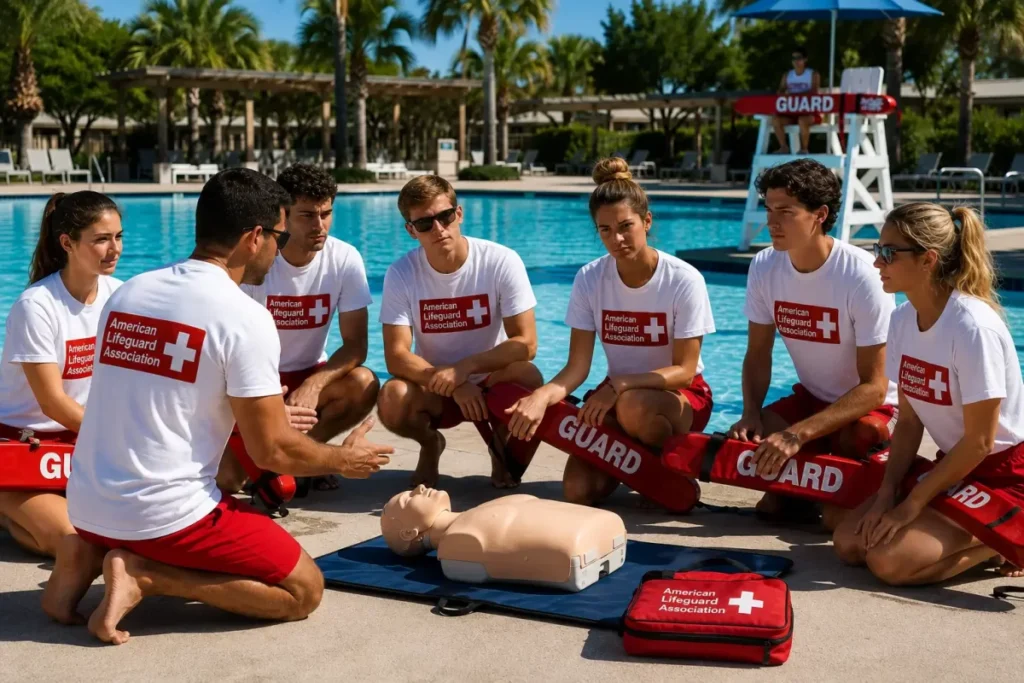
Professional lifeguard classes cover a wide range of lifesaving topics. While exact requirements may vary depending on the course type, facility, state, employer, and aquatic environment, students can expect lifeguard classes to address the essential areas needed for aquatic safety.
Lifeguards must learn how to scan the water effectively, recognize high-risk areas, identify unsafe behavior, and prevent injuries before they occur. Surveillance is one of the most important skills a lifeguard develops. A lifeguard who scans properly can identify a swimmer in trouble before the situation becomes worse.
Students learn how to maintain attention, avoid distractions, rotate properly, communicate with other lifeguards, and stay aware of changing conditions. At pools, waterparks, beaches, and waterfronts, risks can change quickly. A good lifeguard class teaches students how to stay alert and respond to those changes.
Drowning can be quiet and fast. A person in distress may not be able to shout, wave, or call for help. Lifeguard classes teach students how to recognize signs of trouble, including weak swimming, vertical body position, lack of forward progress, panic, submersion, floating face-down, or sudden disappearance from view.
Learning to recognize a victim quickly is one of the most important parts of lifeguard training. Early recognition leads to faster response, and faster response can save lives.
Lifeguard classes teach rescue skills for different types of victims and different aquatic environments. Students may learn entries, approaches, assists, rescue tube use, active victim rescues, passive victim rescues, submerged victim recovery, and safe removals from the water.
Rescue skills require more than strength. They require technique, control, safety awareness, and practice. A lifeguard must know how to protect the victim while also protecting themselves.
Lifeguards are often expected to provide emergency care until EMS arrives. That is why CPR, AED, and First Aid are core parts of lifeguard classes. Students learn how to recognize cardiac and breathing emergencies, perform CPR, use an automated external defibrillator, provide basic First Aid, and assist with injuries that may occur in aquatic settings.
The CDC’s Model Aquatic Health Code identifies CPR, AED use, First Aid, emergencies, hazard identification, injury prevention, and legal issues among the subjects addressed in lifeguard training course content. (CDC)
A lifeguard does not work alone. Lifeguards are part of a safety team. Professional lifeguard classes help students understand how emergency action plans work, including how to activate the plan, communicate with other staff, clear the water, call EMS, provide care, document incidents, and return the facility to safe operation when appropriate.
A strong emergency response depends on teamwork. Every person on the safety team must know their role before an emergency occurs.
Lifeguarding is a position of public trust. Lifeguard classes should teach students the seriousness of that responsibility. Lifeguards are expected to be alert, respectful, physically prepared, punctual, focused, and professional.
A lifeguard must avoid distractions, follow facility rules, enforce safety policies fairly, and maintain skills throughout the season. Earning a certification is only the beginning. Lifeguards must continue practicing and improving.
The American Lifeguard Association offers lifeguard classes in a video instructor-led blended learning format. This format allows students to complete structured academic instruction while preparing for the hands-on responsibilities required in aquatic environments.
Blended lifeguard classes are especially helpful for students, seasonal employees, employers, parks and recreation departments, camps, schools, hotels, and aquatic facilities that need flexible training options. Instead of waiting for a single group class date, participants can begin the academic portion of their training and move forward in a more efficient way.
However, blended learning does not remove the need for practical competency. Practical competency is addressed within the aquatics environment through employer-based pre-service evaluations and ongoing in-service procedures established to meet CDC Model Aquatic Health Code requirements. These are CDC MAHC facility requirements and national standards set by the CDC, not requirements created by ALA.
The CDC Model Aquatic Health Code defines a “Qualified Lifeguard” as someone who has completed a nationally recognized lifeguard training course, holds a current certificate, has met pre-service requirements, and participates in continuing in-service training at the aquatic facility. (CDC)
That distinction is important. A lifeguard class provides the foundation. The aquatic facility then confirms that the lifeguard can perform the required skills in the specific environment where they will work.
Many people search for “lifeguard classes near me” because they want a convenient way to get trained and certified for a local job. The American Lifeguard Association helps make lifeguard training accessible by offering flexible individual and group training options.
ALA’s national training model is helpful for students who need to begin right away, employers who need to onboard staff quickly, and aquatic facilities that need a practical training solution during the busy season.
When choosing lifeguard classes near you, consider the following:
Does the course include lifeguarding, CPR/AED, and First Aid?
Does the program prepare you for real aquatic emergencies?
Does the class explain prevention, surveillance, and emergency action plans?
Does the employer conduct a facility-specific pre-service evaluation?
Will your certification records be easy to verify?
Does the training provider have experience in aquatic safety?
Does the course fit your schedule and employment needs?
The best lifeguard class is not simply the closest one. It is the one that prepares you to do the job responsibly.
Different students and employers may need different types of lifeguard classes. The right class depends on your experience, swimming ability, job setting, and certification needs.
First-time lifeguard classes are designed for students who are new to lifeguarding. These classes introduce the fundamentals of aquatic safety, victim recognition, water rescue, CPR/AED, First Aid, and professional responsibilities. This is the right option for students, seasonal employees, camp staff, swim club workers, hotel pool staff, and anyone preparing for their first lifeguard position.
Lifeguard certification classes prepare participants to earn a lifeguard certification that may be used when applying for lifeguard jobs. Certification classes generally include coursework, knowledge testing, rescue principles, CPR/AED, and First Aid. The U.S. Department of Labor’s Field Operations Handbook states that the Wage and Hour Division has determined that American Lifeguard Association certification programs are similar to those offered by the American Red Cross and satisfy the requirements of 29 CFR § 570.34(l), while noting the list is not exhaustive. (DOL) Students should always confirm acceptance with their employer, local authority, or facility before beginning work, because hiring requirements may vary by location and job setting.
Lifeguard recertification classes are designed for individuals who have previously been certified and need to renew or refresh their credentials. Recertification helps lifeguards review important skills, update knowledge, and maintain readiness for aquatic emergencies. Lifeguard recertification is important because skills can decline without practice. CPR, rescue techniques, scanning habits, and emergency response procedures must be refreshed regularly.
Shallow water lifeguard classes are designed for facilities where lifeguards supervise shallower aquatic environments. These may include certain pools, aquatic play areas, shallow water attractions, or other controlled environments where deep-water rescue skills may not be the primary focus. Students who are not ready for deep-water lifeguarding may be better suited for a shallow water lifeguard class, depending on employer needs and local requirements.
Employers often need to train multiple lifeguards before the summer season begins. Group lifeguard classes can help aquatic facilities prepare staff more efficiently. This is useful for community pools, waterparks, private clubs, schools, camps, resorts, and municipal aquatic programs. Employers should combine certification training with facility-specific orientation, pre-service skills evaluations, emergency action plan training, and ongoing in-service practice.
Requirements for lifeguard classes may vary depending on the type of course, aquatic environment, employer, and local rules. In general, students should be prepared to meet age, swimming, physical, and safety requirements.
Many lifeguard positions require candidates to be at least 15 years old for traditional swimming pools and waterparks. Under federal youth-employment guidance, 15-year-olds may perform permitted lifeguard duties at traditional swimming pools and water amusement parks when properly trained and certified, while natural environments such as rivers, lakes, reservoirs, and ocean beaches require lifeguards to be at least 16 for employment. (DOL)
Students should also be comfortable in the water and prepared to demonstrate swimming ability. Deep-water lifeguard classes may require stronger swimming skills than shallow-water programs. Employers may also require facility-specific skills testing before allowing a lifeguard to work on duty.
Before enrolling, students should review the course requirements and confirm that the class matches their goals.
Completing lifeguard classes is an important achievement, but it is not the end of the process. After completing the academic and certification requirements, lifeguards must be prepared to demonstrate practical competency in the aquatic environment where they will work.
The CDC Model Aquatic Health Code requires pre-service training plans to include facility-specific policies and procedures, demonstration of safety team skills before assuming on-duty lifeguard responsibilities, and documentation of training. It also addresses ongoing in-service training to maintain skills.
This means a responsible aquatic facility should ensure that each lifeguard understands the specific pool, waterpark, beach, waterfront, equipment, emergency action plan, surveillance zones, communication system, and facility rules before working independently.
The best lifeguards continue training after certification. They attend in-service sessions, practice rescues, review CPR/AED skills, participate in emergency drills, and stay physically prepared.
The American Lifeguard Association has been offering lifeguard courses since 1990 and states that its mission is to improve the quality and accessibility of health and safety programs for the public. (American Lifeguard Association)
ALA’s lifeguard classes are designed to make training accessible while supporting aquatic safety, drowning prevention, emergency care, and professional readiness. Students can begin training in a flexible format and prepare for the responsibilities of lifeguarding.
The American Lifeguard Association also uses Universal Lifeguard Certification to help verify ALA lifeguard credentials. ALA’s website explains that ULC allows lifeguards to manage professional credentials online and provides a validation service for certifications. (American Lifeguard Association)
Students choose ALA lifeguard classes because they want:
Flexible training options.
Video instructor-led blended learning.
Lifeguarding, CPR/AED, and First Aid training.
A practical path toward certification.
Nationally recognized aquatic safety education.
Credential verification support.
Training designed for individuals and groups.
A program focused on prevention and emergency response.
ALA’s approach helps students move forward without unnecessary delays while still recognizing the importance of employer-based skills evaluation and ongoing in-service training at the aquatic facility.
Lifeguard classes are a strong choice for anyone who wants to work in aquatic safety or gain lifesaving skills that can be used around pools, beaches, camps, resorts, schools, waterparks, and community facilities.
Lifeguard classes are especially useful for:
High school and college students looking for a summer job.
Swimmers who want to turn their skills into employment.
Camp counselors working near water.
Pool employees seeking certification.
Hotel and resort staff.
Parks and recreation employees.
Waterpark staff.
Fitness center and country club employees.
Teachers, coaches, and youth program staff.
Individuals interested in public safety and emergency response.
Lifeguarding can also be an excellent first job because it teaches responsibility, leadership, discipline, communication, and confidence. Lifeguards learn skills that matter far beyond the pool deck.
One of the greatest benefits of lifeguard classes is confidence. A trained lifeguard knows what to look for, how to respond, and how to work as part of a safety team. That confidence comes from preparation.
Students who complete lifeguard classes gain a deeper understanding of water safety, emergency care, rescue principles, and professional conduct. They learn that safety is not accidental. It is the result of training, attention, teamwork, and readiness.
When a lifeguard is prepared, the entire aquatic facility is stronger.
Lifeguard classes are training programs that teach students how to help prevent aquatic emergencies, recognize swimmers in distress, perform water rescues, provide CPR/AED and First Aid, and respond as part of an emergency action plan.
Yes. Professional lifeguard classes normally include CPR/AED and First Aid because lifeguards may need to provide emergency care before EMS arrives. CPR, AED use, First Aid, emergencies, and injury prevention are also identified in the CDC Model Aquatic Health Code as important lifeguard training course content. (CDC)
After completing lifeguard classes, your employer or aquatic facility should verify your practical competency in the environment where you will work. Facility-specific pre-service evaluation, emergency action plan training, and ongoing in-service training are important parts of lifeguard readiness.
Join thousands trained by the American Lifeguard Association. Nationally recognized certification, backed by 30+ years of experience.