Lifeguard On Site Training – Building Safer Communities
Lifeguard recertification is an essential step for any lifeguard who wants to keep credentials current, maintain employment eligibility, refresh lifesaving skills, and remain prepared to respond when seconds matter. A lifeguard’s certification is more than a document. It represents a continuing commitment to water safety, drowning prevention, emergency response, CPR/AED, First Aid, and professional responsibility.
The American Lifeguard Association provides lifeguard recertification through a video instructor-led blended learning format that allows returning lifeguards to renew their lifeguarding, CPR/AED, and First Aid certification for another two years. ALA recertification includes instructor-led video training, online course materials, a final exam, and certification records placed in a national verification system for employer and health department review. (AmericanLifeguard)
Recertification is not simply about extending the expiration date on a certificate. Lifeguard skills must be reviewed, practiced, and maintained. A lifeguard must be ready to recognize a swimmer in distress, activate an emergency action plan, enter the water safely, use rescue equipment, remove a victim, begin CPR, use an AED, provide First Aid, and work as part of a coordinated safety team.
The need for trained and current lifeguards remains urgent. The CDC reports that every year in the United States there are an estimated 4,000 fatal unintentional drownings and 8,000 nonfatal drownings. The CDC also identifies drowning as the leading cause of death for children ages 1–4 and the second leading cause of unintentional injury death for children ages 5–14 after motor vehicle crashes. (CDC)
That is why lifeguard recertification matters. A current credential helps document that a lifeguard has renewed training in the core areas of aquatic safety, while employer-based pre-service evaluation and ongoing in-service training help confirm that the lifeguard remains ready for the specific aquatic facility where they will work.
Lifeguard recertification is the renewal process for lifeguards who have previously completed lifeguard certification and need to keep their credentials active. A recertification course reviews the essential knowledge and skills required for lifeguarding, including prevention, surveillance, victim recognition, water rescue, CPR/AED, First Aid, emergency action plans, and professional responsibilities.
The American Lifeguard Association recertification program allows previously certified lifeguards to renew certification in lifeguarding, CPR/AED, and First Aid for another two years. The program is designed for individuals and small groups who need a practical, accessible, and efficient renewal pathway. (AmericanLifeguard)
A complete lifeguard recertification pathway should help returning lifeguards review:
Water surveillance and prevention.
Recognition of swimmers in distress.
Active and passive victim rescues.
Use of rescue tubes and rescue equipment.
CPR/AED for the professional rescuer.
First Aid for aquatic and poolside emergencies.
Emergency action plans.
Communication with other staff and EMS.
Professional lifeguard responsibilities.
Employer-based practical competency evaluation.
Ongoing in-service training.
Lifeguard recertification is especially important for seasonal lifeguards who may spend several months away from active duty. Even experienced lifeguards benefit from reviewing rescue skills, CPR/AED, First Aid, scanning habits, and emergency response procedures before returning to the lifeguard chair.
Lifeguarding requires more than memory. It requires readiness. A lifeguard may understand the steps of a rescue, but in an emergency those steps must be performed quickly, correctly, and confidently.
Skills can decline when they are not practiced. A returning lifeguard may remember the general idea of CPR, but chest compression rhythm, AED use, rescue breathing, victim assessment, team communication, and emergency action plan response all require regular review. Water rescue skills also require practice because a lifeguard must coordinate swimming ability, rescue equipment, victim contact, safety positioning, removals, and post-rescue care.
Recertification helps lifeguards refresh the skills that matter most, including:
How to recognize a swimmer in distress.
How to respond before a situation becomes fatal.
How to perform active and passive victim rescues.
How to remove a victim safely from the water.
How to provide CPR/AED and First Aid.
How to communicate with other lifeguards and facility staff.
How to follow emergency action plans.
How to maintain professional focus during surveillance.
A lifeguard may go months without performing a rescue. That is a good thing, because prevention is the goal. But when a rescue is needed, there may be no time to hesitate. Recertification helps rebuild confidence and reinforces lifesaving procedures before a lifeguard returns to active duty.
Global drowning deaths each year (WHО)
Cause of injury death, ages 1-4 in the U.S.
Years of ALA lifeguard training
The best time to complete lifeguard recertification is before your current certification expires. Renewing early helps avoid gaps in employment eligibility, prevents scheduling problems, and gives your employer time to verify your updated credentials.
Many aquatic facilities will not allow a lifeguard to work with an expired certification. This can create problems for the lifeguard and the employer, especially during peak season when pools, waterparks, camps, schools, hotels, resorts, and recreation departments need every qualified lifeguard available.
Renewing early helps you:
Avoid being removed from the work schedule.
Maintain eligibility for lifeguard employment.
Keep CPR/AED and First Aid credentials current.
Give your employer time to update records.
Avoid last-minute stress before pool opening.
Stay prepared for pre-season in-service training.
Support a safer aquatic environment.
A good renewal plan starts by checking your expiration date and beginning recertification before your credential lapses. If your certification has already expired, you should confirm with your employer whether recertification is accepted or whether a full course is required.
The American Lifeguard Association provides a practical lifeguard recertification pathway for returning lifeguards who need to renew credentials in lifeguarding, CPR/AED, and First Aid. ALA recertification is designed to support individuals and small groups through instructor-led video training, online materials, and a final online exam.
Upon successful completion, participants receive a two-year certification in lifeguarding, CPR/AED, and First Aid. ALA also places records in a national verification system so employers and health department officials can verify certification. (AmericanLifeguard)
ALA recertification includes:
Video instructor-led training.
Online course materials.
Lifeguarding renewal.
CPR/AED renewal.
First Aid renewal.
Final online exam.
Two-year certification upon successful completion.
National verification record placement.
Continued access to course review materials.
The final exam requires a score of 80% or higher. Participants may review the online materials as needed, and the recertification process is designed to help returning lifeguards refresh knowledge while moving efficiently toward renewal. (AmericanLifeguard)
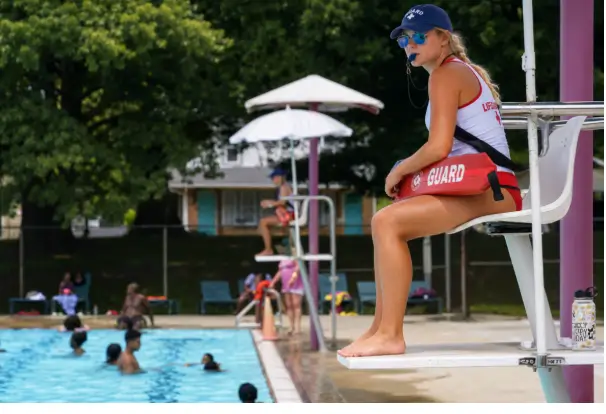
ALA lifeguard recertification is best described as video instructor-led blended learning, not simply “online-only.” This distinction is important because lifeguarding is a practical safety role. A lifeguard must be able to perform in real aquatic environments, not only complete academic coursework.
Through ALA’s video instructor-led blended learning format, returning lifeguards complete structured academic review covering lifeguarding, CPR/AED, First Aid, prevention, rescue response, emergency care, and professional responsibilities. This flexible model allows lifeguards to review essential information, revisit training videos, study at their own pace, and renew certification while preparing for employer-based practical competency evaluation.
Practical competency is addressed within the aquatics environment through employer-based pre-service evaluations and ongoing in-service procedures established to meet CDC Model Aquatic Health Code requirements. These are CDC MAHC requirements and national standards established by the CDC, not requirements created by the American Lifeguard Association.
The CDC Model Aquatic Health Code defines a “Qualified Lifeguard” as a person who has completed an AHJ-recognized lifeguard training course, holds a current certificate, has met pre-service requirements, and participates in continuing in-service training at the aquatic facility. (CDC)
This means certification, employer-based pre-service evaluation, and ongoing in-service training work together. ALA recertification renews the credential. The employer confirms practical readiness in the actual aquatic facility where the lifeguard will work.
Blended lifeguard recertification is effective because it supports both academic review and practical readiness. Returning lifeguards may not need to sit through a traditional group course to review material they already know, but they still need structured instruction, current review, and employer-based skill confirmation.
Video instructor-led blended learning allows lifeguards to:
Review training material at their own pace.
Pause and replay important instruction.
Revisit CPR/AED and First Aid concepts.
Refresh rescue procedures before returning to duty.
Study emergency action plan concepts.
Prepare for employer-based skills evaluation.
Maintain access to materials for continued review.
This format is especially helpful for seasonal lifeguards, students, small groups, employers with urgent staffing needs, and returning lifeguards who need an efficient renewal pathway.
Blended learning also supports employers. The academic review can be completed through the ALA program, while the employer focuses on facility-specific readiness, including surveillance zones, rescue equipment, communication systems, emergency action plans, local procedures, and in-service drills.
Lifeguard recertification should review the core areas that every lifeguard needs to perform responsibly. Returning lifeguards may already know the role, but skills must be refreshed before they are needed in an emergency.
Surveillance is one of the most important lifeguard responsibilities. Lifeguards must scan the water continuously, recognize unsafe behavior, identify swimmers in distress, and avoid distractions.
Recertification helps lifeguards review proper scanning habits, zone coverage, rotations, patron supervision, rule enforcement, and communication with other lifeguards. A lifeguard sitting in the chair must be actively watching, not passively present.
Drowning does not always look dramatic. A swimmer in distress may be quiet, vertical in the water, unable to move forward, unable to call for help, or suddenly submerged. A child may slip below the surface without splashing or shouting.
Recertification helps lifeguards review the signs of aquatic distress so they can recognize emergencies early. Early recognition often determines whether a lifeguard can perform a quick assist or must respond to a more serious emergency.
Returning lifeguards should review water entries, approaches, assists, rescue tube use, active victim rescues, passive victim rescues, submerged victim response, removals, and team rescues.
A successful rescue requires proper technique, calm judgment, effective equipment use, and awareness of both victim safety and rescuer safety. Recertification helps lifeguards refresh the skills needed to respond effectively.
CPR/AED renewal is a critical part of lifeguard recertification. A lifeguard may need to respond to a drowning incident, breathing emergency, cardiac emergency, or sudden collapse before EMS arrives.
Lifeguards should be prepared to begin care quickly, use an AED, continue care until additional help arrives, and coordinate with other responders. CPR/AED skills must be reviewed because confidence and accuracy can decline without practice.
Lifeguards may respond to cuts, falls, heat illness, head injuries, seizures, allergic reactions, breathing problems, spinal concerns, and other emergencies. First Aid renewal helps lifeguards review how to provide immediate care and when to activate EMS.
First Aid is part of everyday aquatic facility readiness. Not every incident is a drowning, but every incident deserves a trained response.
Every aquatic facility should have an emergency action plan. Recertification helps lifeguards review how emergency action plans work, including recognition, activation, rescue, care, communication, water clearing, EMS contact, crowd control, and documentation.
A lifeguard should never be learning the emergency action plan for the first time during an emergency.
The CDC Model Aquatic Health Code provides important national guidance for aquatic facility operations, including lifeguard qualifications, training, safety plans, pre-service requirements, and in-service training. The MAHC identifies lifeguard training course content that includes hazard identification and injury prevention, emergencies, CPR, AED use, bag-valve-mask use, First Aid, and legal issues. (CDC)
For employers, the CDC MAHC is especially important because it explains that a lifeguard’s current certificate is only one part of being a qualified lifeguard. The MAHC definition of a qualified lifeguard includes current certification, pre-service requirements, and participation in continuing in-service training at the aquatic facility. (CDC)
The CDC MAHC also requires aquatic facilities to create and implement a safety plan that includes a staffing plan, emergency action plan, biohazard action plan, pre-service training plan, and in-service training plan. The staffing plan includes responsibilities such as conducting pre-service evaluations and conducting in-service training. (CDC)
This is a key point for employers: certification renewal is not the end of the process. After a lifeguard completes recertification, the employer should confirm that the lifeguard is prepared for the actual facility.
Before a lifeguard assumes on-duty responsibilities, the employer should complete a facility-specific pre-service evaluation. The CDC MAHC identifies pre-service requirements that include policies and procedures specific to the aquatic facility, demonstration of safety team skills specific to the facility before assuming on-duty lifeguard responsibilities, and documentation of training. (CDC)
Employer-based pre-service evaluation may include:
Reviewing facility rules and operating procedures.
Reviewing surveillance zones.
Practicing lifeguard rotations.
Identifying blind spots.
Reviewing the emergency action plan.
Locating rescue tubes, backboards, AEDs, First Aid kits, and emergency supplies.
Practicing rescue response routes.
Demonstrating water rescue skills.
Demonstrating CPR/AED and First Aid readiness.
Reviewing communication procedures.
Practicing team response drills.
Documenting completed training.
This process should be specific to the aquatic facility. A hotel pool, municipal pool, waterpark, school pool, country club, resort pool, shallow-water attraction, and camp waterfront may all have different layouts, risks, patron loads, equipment, and procedures.
The employer’s role is essential because only the employer can evaluate how a lifeguard performs in the environment where the lifeguard will actually work.
In-service training is ongoing training conducted during employment to maintain lifeguard readiness. The CDC MAHC states that aquatic facility staff must participate in periodic in-service training to maintain skills and that documentation of in-service training must be maintained. The MAHC also identifies in-service documentation elements such as attendees, content, date, and trainer names, and provides that in-service training plans include frequency, documentation, maintenance of certifications, and demonstration of test-ready skills. (CDC)
Employer in-service training may include:
Surveillance practice.
Scanning and vigilance drills.
Emergency action plan drills.
CPR/AED refreshers.
First Aid scenarios.
Active and passive victim rescues.
Submerged victim response.
Spinal injury response.
Water extraction practice.
Team communication drills.
Zone coverage review.
Equipment location review.
Incident documentation review.
In-service training should not be treated as a formality. It is one of the most important ways employers maintain lifeguard readiness throughout the season.
Aquatic employers should track certification expiration dates and plan renewal before credentials expire. A facility should not wait until a lifeguard’s certification has lapsed before addressing recertification.
Employers should maintain records that include:
Lifeguard certification expiration dates.
CPR/AED expiration dates.
First Aid expiration dates.
Copies of current certificates.
Pre-service evaluation dates.
In-service training dates.
Skills evaluation records.
Emergency action plan training records.
Staffing plans and surveillance zone assignments.
The CDC MAHC requires originals or copies of required lifeguard certificates to be maintained at the aquatic facility and available for inspection. It also requires documentation of pre-service and in-service training to be maintained. (CDC)
A strong employer program combines certification renewal with pre-service evaluation, in-service training, documentation, and supervisor oversight. This creates a safer and more defensible aquatic safety system.
Many lifeguards work seasonally. They may work during the summer, return to school, and then return to lifeguarding the next year. Returning seasonal lifeguards should complete recertification early enough to be ready before the facility opens.
Seasonal lifeguards should use recertification to refresh:
Water rescue techniques.
CPR/AED and First Aid.
Scanning and vigilance.
Victim recognition.
Emergency response steps.
Facility rules.
Professional conduct.
Team communication.
A returning lifeguard may remember the job, but that does not remove the need for review. After months away from active duty, skills and confidence may need to be rebuilt. Employers should encourage returning staff to renew early and participate in pre-season in-service training before opening day.
ALA’s public FAQ states that participants who successfully complete its lifeguard classes receive certifications in Lifeguarding, CPR/AED, and First Aid that are valid for two years. (American Lifeguard Association)
Certification documents completion of the required training process. Employer-based evaluation then helps confirm facility-specific readiness.
This is the best way to explain the pathway:
Training provides the knowledge foundation.
Certification documents successful completion.
Employer-based evaluation confirms practical readiness.
Ongoing in-service training maintains skills.
Together, these steps support responsible lifeguard preparation.
ALA lifeguard recertification includes lifeguarding, CPR/AED, and First Aid renewal. This combined approach is important because lifeguards are often the first trained responders during aquatic emergencies.
A drowning victim may need rescue breathing or CPR. A swimmer may suffer a cardiac emergency. A child may be injured on the pool deck. A patron may experience heat illness, seizure, allergic reaction, bleeding, or a head injury. Lifeguards must be prepared to respond before EMS arrives.
Lifeguarding, CPR/AED, and First Aid work together. A lifeguard must be ready to rescue a victim from the water and then provide care on the deck. ALA recertification provides a two-year certification in lifeguarding, CPR/AED, and First Aid upon successful completion. (AmericanLifeguard)
Many lifeguards search for online lifeguard recertification because they need a convenient way to renew their credentials. ALA’s program should be described accurately as video instructor-led blended learning, because practical competency remains part of lifeguard readiness.
Online academic review can help lifeguards refresh important knowledge, including CPR/AED, First Aid, prevention, surveillance, rescue concepts, emergency care, legal issues, and professional responsibilities. However, lifeguards must also be prepared to demonstrate skills in the aquatic environment as required by their employer.
This creates a practical renewal model:
ALA provides structured video instructor-led academic review.
ALA renews lifeguarding, CPR/AED, and First Aid certification after successful completion.
The employer verifies the certification.
The employer conducts facility-specific pre-service evaluation.
The employer maintains ongoing in-service training.
This blended model supports flexibility without ignoring the practical nature of lifeguarding.
If your lifeguard certification expires, your employer may not allow you to work until it is renewed. An expired certification can create scheduling problems, employment delays, and staffing challenges for the facility.
Some employers may accept recertification after expiration. Others may require a full lifeguard course if too much time has passed. Requirements may vary by employer, jurisdiction, insurance rules, facility type, and local authority.
If your certification has already expired:
Check the expiration date.
Contact your employer or supervisor.
Confirm whether recertification is accepted.
Enroll in the correct renewal option.
Complete required training and testing.
Provide updated proof of certification.
Complete any required pre-service skills review.
Participate in ongoing in-service training.
Do not assume that an expired credential will be accepted for work. Confirm with your employer before returning to duty.
Under the Fair Labor Standards Act, the U.S. Department of Labor—serving as the federal Authority Having Jurisdiction (AHJ)—has confirmed that ALA meets all national requirements for lifeguard training and certification. As a result, our training meets the national requirements across all 50 states, the District of Columbia, and U.S. territories, and is widely used in both public and federally operated aquatic facilities.
Many lifeguards search for “lifeguard recertification near me” because they need to renew quickly for work. ALA’s video instructor-led blended learning format provides a flexible recertification option for returning lifeguards who need to renew without waiting for a traditional local class date.
This can be especially helpful for:
Returning summer lifeguards.
Students home from school.
Pool staff preparing for opening day.
Waterpark employees.
Camp lifeguards.
Hotel and resort pool staff.
Private club lifeguards.
Country club lifeguards.
School and university lifeguards.
Employers renewing multiple staff members.
The best recertification option is one that renews your credential, supports CPR/AED and First Aid readiness, and works with employer-based practical competency evaluation.
Lifeguard recertification is intended for previously certified lifeguards who need to renew credentials and maintain readiness. It is especially important for lifeguards who plan to continue working in aquatic safety.
ALA recertification may be appropriate for:
Lifeguards with credentials nearing expiration.
Returning seasonal lifeguards.
Pool lifeguards.
Waterpark lifeguards.
Hotel and resort lifeguards.
Camp lifeguards.
School and university lifeguards.
Country club lifeguards.
Fitness center lifeguards.
Community pool lifeguards.
Small groups of returning lifeguards.
Employers renewing staff credentials.
ALA lifeguard recertification provides a practical renewal pathway for returning lifeguards and employers who need flexible training access.
Benefits include:
Video instructor-led blended learning.
Lifeguard, CPR/AED, and First Aid renewal.
Two-year certification upon successful completion.
Online course materials.
Final online exam.
National verification record placement.
Useful option for individuals and small groups.
Training materials available for continued review.
Support for employer-based practical skills evaluation.
A practical pathway for returning lifeguards.
This program helps lifeguards renew credentials while reinforcing the importance of continued practice, employer-based pre-service evaluation, and ongoing in-service training under CDC Model Aquatic Health Code requirements.
Review your current lifeguard, CPR/AED, and First Aid certification expiration dates. Begin renewal before expiration whenever possible.
Enroll in the ALA lifeguard recertification program and begin the video instructor-led blended learning process.
Review lifeguarding, CPR/AED, First Aid, prevention, rescue skills, emergency response, and professional responsibility.
Complete the final exam. The ALA recertification final exam requires a score of 80% or higher. (AmericanLifeguard)
Upon successful completion, receive your renewed two-year certification in lifeguarding, CPR/AED, and First Aid. (AmericanLifeguard)
Your employer should complete facility-specific pre-service evaluation before assigning you to active duty.
Continue practicing skills through ongoing in-service procedures established to meet CDC Model Aquatic Health Code requirements.
The ALA recertification final exam requires a score of 80% or higher. (AmericanLifeguard)
After recertification, provide your updated certificate to your employer, confirm your certification record is verified, complete any required employer-based skills evaluation, and participate in ongoing in-service training.
Join thousands trained by the American Lifeguard Association. Nationally recognized certification, backed by 30+ years of experience.